Massage Versus Halotherapy: Which Reset Fits You?
Your shoulders are tight from a long week, but your sinuses also feel heavy. Or perhaps you are craving quiet time that does more than simply fill an hour. When choosing between massage versus halotherapy, the best fit comes down to what your body is asking for most right now.
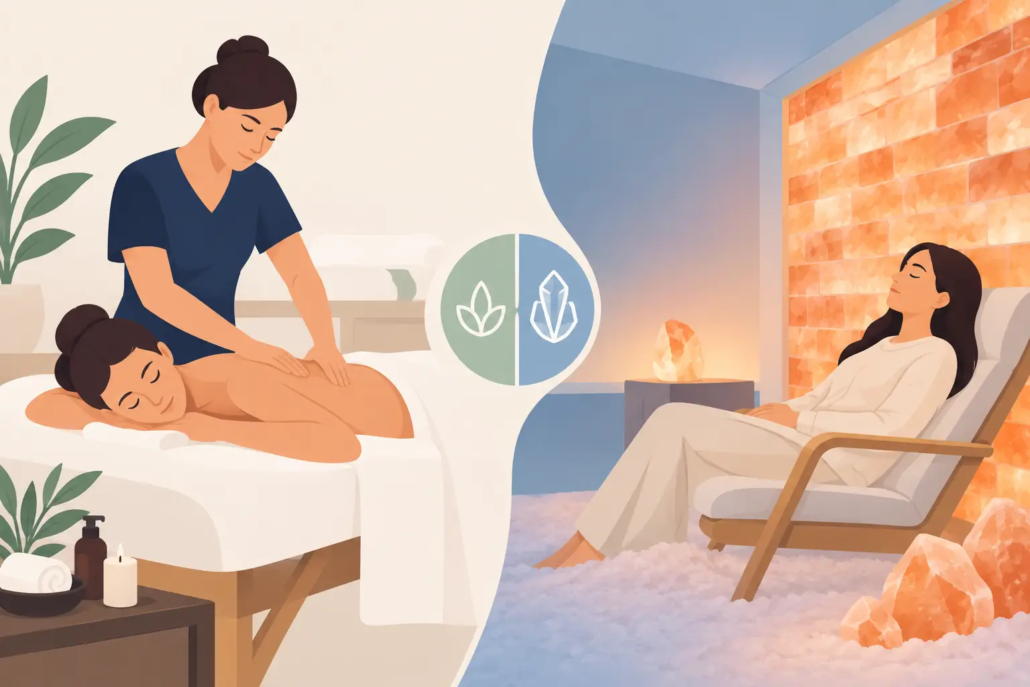
Both experiences can create a welcome pause from a demanding schedule. Both invite you to slow down, breathe, and leave feeling cared for. Yet they work in very different ways. Massage centers on hands-on muscle relief, while halotherapy offers a calm, dry-salt environment often chosen for respiratory comfort, skin-focused self-care, and deep relaxation.
Massage Versus Halotherapy: The Main Difference
A massage is a touch-based service. A trained massage therapist uses pressure, movement, and techniques such as kneading or stretching to address tension in the muscles and soft tissues. It is often the natural choice when you can point to a specific area and say, “That is where I hurt.” Think tight shoulders, a stiff neck, tired legs, or the lingering physical stress of hours at a desk.
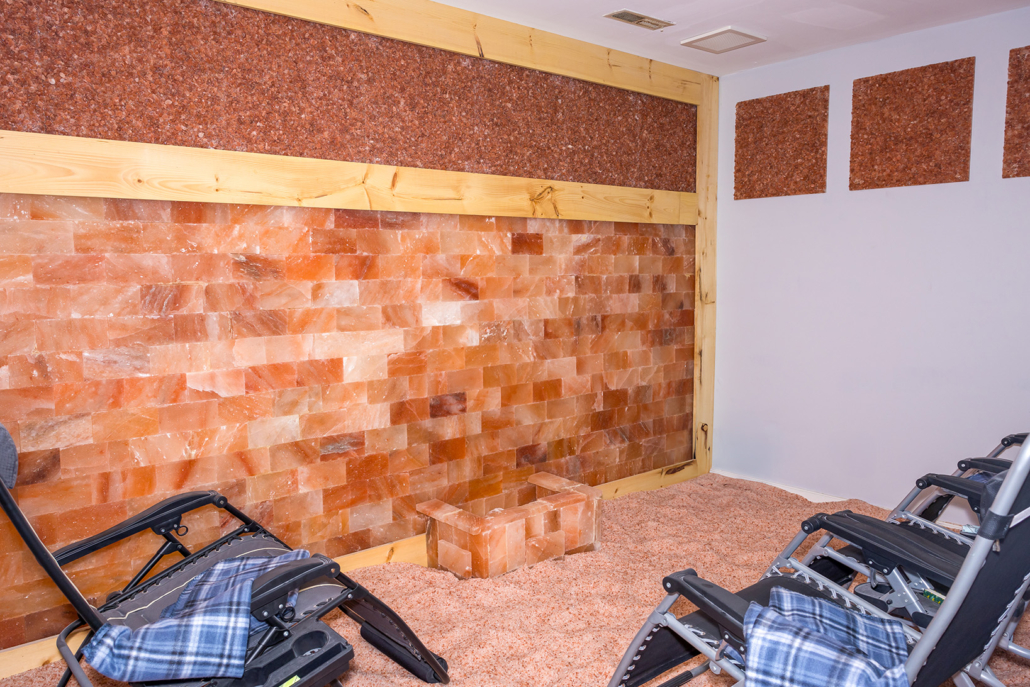
Halotherapy, often called dry salt therapy, is a quiet, non-invasive experience. During a session, you relax in a salt cave or salt therapy space while finely ground dry salt is dispersed into the air. Rather than receiving hands-on bodywork, you simply settle in, breathe, and allow yourself to rest.
That distinction matters. Massage can feel active and targeted. Halotherapy is more passive, making it especially appealing for guests who want a peaceful wellness experience without physical touch, changing into massage attire, or discussing areas of soreness.
When Massage May Be the Better Choice
Massage is often a lovely option when muscle tension is the main concern. If you wake up with a tight neck, feel knots along your upper back, or notice that stress is living in your jaw and shoulders, hands-on work may bring the kind of immediate physical release you are seeking.
It can also be a better fit when you enjoy focused attention from a practitioner. A massage appointment is usually tailored around pressure preferences and the parts of the body that need extra care. For some people, that personalized physical approach feels deeply restorative.
There are trade-offs to consider. Massage may not feel comfortable when you are especially sensitive to touch, feeling under the weather, dealing with certain injuries, or simply not in the mood for conversation and bodywork. Depending on the style of massage, you may also feel tender afterward. That is not necessarily a bad thing, but it is worth considering before booking on the day before a big event or a demanding workout.
If you have a health condition, recent surgery, unexplained pain, pregnancy-related questions, or a concern about whether massage is appropriate, check with your health care provider and communicate openly with your therapist.
When Halotherapy May Be the Better Choice
Halotherapy is well suited to the person who wants to be still. You do not have to perform, explain, or push through anything. You arrive, get comfortable, and take a break from the constant pull of screens, errands, work, and caregiving.
Many guests choose dry salt therapy when seasonal congestion, dry indoor air, or everyday respiratory discomfort leaves them longing for a more open, refreshed feeling. Others are drawn to the skin-focused side of salt therapy, particularly when dry or irritated-looking skin makes them feel less than their best. Salt therapy is a wellness service, not a replacement for medical care, and individual experiences vary. Still, many people appreciate it as a gentle addition to their self-care routine.
The setting is part of the value. A salt cave session creates a different kind of reset than a busy gym, a packed waiting room, or even a traditional spa treatment. There is no pressure to talk. You can sit quietly, read, meditate, or simply close your eyes while the space encourages your nervous system to settle.
At Relax, Release, Renew Salt Cave, that sense of personal care is central to the experience. A booked session gives you dedicated time to step away from the noise and return to your day feeling calmer, lighter, and more restored.
Choose Based on What You Want to Feel Better
It helps to begin with one simple question: what do you hope will feel different when you leave?
If your answer is, “I want my back and shoulders to loosen,” massage may be the more direct choice. If you are thinking, “I need to breathe, rest, and get out of my head,” halotherapy may be a better match.
For a wellness day centered on stress relief, either can be meaningful. The difference is in the pathway. Massage tends to release physical tension through skilled touch. Halotherapy supports relaxation through stillness, a tranquil environment, and the gentle presence of dry salt in the air.
Your comfort level matters, too. Some guests love the close, individualized attention of massage. Others feel most relaxed when they can remain fully clothed, settle into a chair, and enjoy quiet without being touched. Neither preference is more correct. It is simply useful information about what helps you truly rest.
Can You Enjoy Both?
Absolutely. Massage and halotherapy do not need to compete for a place in your routine. They can complement each other beautifully, especially during a season when stress, tight muscles, dry skin, and congestion all seem to arrive at once.
You might choose massage after a strenuous week, a long drive, or a period of physical tension. Then, on another day, book a salt therapy session when your priority is quiet, respiratory comfort, or a mental reset. Some people find that alternating services helps them stay more consistent with self-care because each visit serves a different need.
The key is not to turn wellness into another item on a demanding checklist. Notice your patterns. Do your shoulders tighten after busy workdays? Does allergy season leave you craving a more comfortable breathing routine? Do you feel emotionally drained even when your body is not especially sore? Your answers can guide your next appointment.
A Few Practical Considerations Before You Book
Timing can shape your choice. If you have only a short window and want a low-effort pause, a salt therapy session may feel easy to fit into your day. If you are ready to devote time to a more targeted, hands-on service, massage can offer a focused experience.
Think about what you are wearing and how you want to transition afterward. Halotherapy is generally simple and comfortable: wear relaxed clothing and plan to unwind. Massage may require a little more preparation, depending on the practice and the type of service you select.
Be realistic about your goals. Massage can support comfort and mobility, but it is not a cure for every source of pain. Halotherapy can be a peaceful wellness complement, but it does not diagnose, treat, or replace care for asthma, skin conditions, infections, or other medical concerns. For persistent symptoms or anything that worries you, seek guidance from a qualified health professional.
Let Your Next Visit Match Your Need
There is no wrong answer in massage versus halotherapy. One day, relief may mean working out the knot between your shoulder blades. Another day, it may mean sitting quietly in a calming salt-filled space and giving yourself permission to do nothing at all.
Choose the experience that feels most supportive of where you are today, not the one you think you are supposed to choose. A little intentional care can make room for a softer breath, a quieter mind, and a renewed sense of yourself.



Leave a Reply
Want to join the discussion?Feel free to contribute!