
How Ionic Foot Baths Work and What You May Feel
A warm foot soak can change the pace of an entire day. If you have wondered how ionic foot baths work, the short answer is that they combine warm salt water with a gentle electrical current – then pair that process with the simple comfort of sitting still and caring for yourself.
The longer answer is worth knowing, especially if you are considering an ionic foot bath as part of your self-care routine. These sessions can feel deeply relaxing, but the science behind the changing water color is often misunderstood. Understanding what is happening helps you enjoy the experience with clear, comfortable expectations.
How Ionic Foot Baths Work
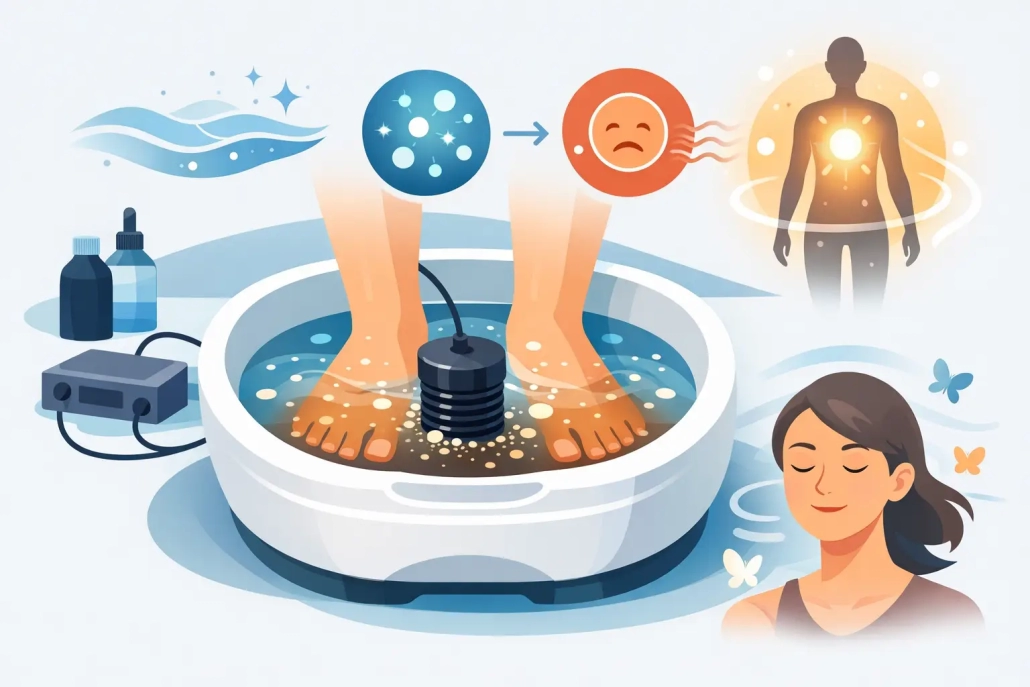
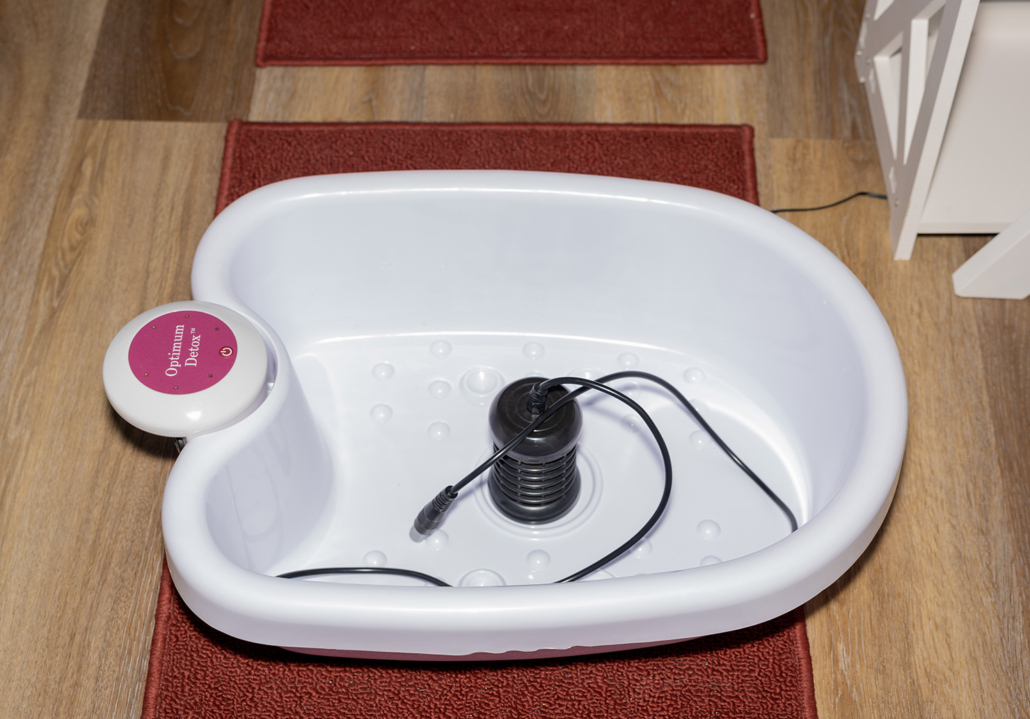
An ionic foot bath begins with a basin of warm water and a small amount of salt. Your feet rest in the water while an electrode array, sometimes called an ionizing array, is placed in the basin. The unit sends a low-voltage electrical current through the salt water.
Salt makes water more conductive, meaning electricity can travel through it more easily. Once the device is turned on, the current creates an electrochemical reaction in and around the metal array. This process can cause oxidation and corrosion of the metal, while minerals in the water and particles from the array interact with the water.
That reaction is why the water may shift from clear to yellow, orange, brown, green, gray, or even darker shades during a session. The color change can happen whether feet are in the water or not, because it is largely related to the salt water, electrical current, and metal components of the device.
Does the Water Color Show What Left Your Body?
This is where a little honest perspective matters. Some ionic foot bath services describe the changing water as toxins leaving through the feet. However, there is not strong scientific evidence that water color can identify toxins or prove that the body is being detoxified through an ionic foot bath.
Your body already has remarkable systems for processing and removing waste. The liver, kidneys, lungs, digestive system, and skin all play a role. A foot bath should not replace medical care, hydration, nutritious meals, sleep, movement, or treatment recommended by your healthcare provider.
Still, a wellness experience does not have to make a medical promise to be meaningful. Many people enjoy an ionic foot bath because it gives them a dedicated pause. Warm water relaxes tired feet, a quiet setting can calm a busy mind, and the ritual itself creates space to release the tension that tends to collect after a long week.
What an Ionic Foot Bath Session Feels Like
Most sessions are simple and unhurried. You will sit comfortably with your feet in warm water for a set period, often around 20 to 30 minutes. There is no need to do anything except settle in, breathe, and let the warmth do its work.
You may notice gentle warmth around your feet or a mild tingling sensation. Some people feel sleepy or deeply relaxed afterward, much like they do after a soothing bath, massage, or quiet meditation. Others simply appreciate the feeling of stepping away from their phone, responsibilities, and mental to-do list for a little while.
The experience can vary from person to person. Water temperature, room comfort, your sensitivity to electrical stimulation, and how well-rested or hydrated you are that day can all affect how you feel. The best session is not about chasing a certain water color or sensation. It is about comfort.
At Relax, Release, Renew Salt Cave, this type of service fits naturally into a broader self-care day. Pairing quiet time with supportive wellness rituals can be especially welcome when life feels full, your feet are tired, or you simply need a peaceful reset.
Why the Salt Water Matters
The salt in an ionic foot bath is more than a spa-like touch. It helps create the conductive environment needed for the device to operate. Without adequate conductivity, the electrical process may be weaker or inconsistent.
The amount and type of salt, the water temperature, the condition of the electrode array, and the minerals already present in the water can all influence the reaction. That is another reason water color is not a reliable health reading. Two sessions may look different even when the same person uses the same machine.
Over time, the metal array can develop buildup or wear down because of oxidation. Proper cleaning and replacement of the array matter for both the appearance of the water and the quality of the service. A thoughtfully maintained setup helps keep the session clean, pleasant, and consistent.
Making the Most of Your Foot Bath
Think of an ionic foot bath as an invitation to slow down rather than a test your body has to pass. Arrive hydrated, wear comfortable clothing, and give yourself a few extra minutes afterward before rushing back into a demanding schedule.
Drinking water before and after a session is a sensible wellness habit, particularly if you tend to forget hydration during busy days. You may also enjoy following your soak with a nourishing foot cream or body scrub, cozy socks, and a quiet evening at home. Those small choices can extend the feeling of care well beyond the appointment.
If you are booking a session as part of a larger relaxation plan, consider what your body needs most that day. Some guests want a peaceful break by itself. Others enjoy combining a foot bath with calming salt therapy, restful breathing, or an intentional moment away from constant noise. There is no single right way to create a restorative routine.
Who Should Use Extra Caution?
Ionic foot baths are generally intended as a comfort-focused wellness service, but they are not right for everyone. Because the session uses an electrical device and involves soaking the feet, it is wise to ask your healthcare provider before participating if you have a pacemaker or other implanted electrical device, are pregnant, have diabetes with reduced sensation in your feet, have significant circulation concerns, or have open cuts, sores, infections, or a skin condition on the feet.
If you feel pain, burning, dizziness, or anything that does not feel right during a session, stop right away and let the service provider know. A session should feel gentle and relaxing, never uncomfortable.
It is also helpful to keep expectations grounded if you are managing an ongoing health concern. An ionic foot bath may be a soothing addition to your personal wellness routine, but it is not a diagnosis, cure, or substitute for professional medical treatment.
A Gentle Ritual, Not a Miracle Claim
The appeal of ionic foot baths is easy to understand. They offer warmth, stillness, and a visible transformation in the water that can make the experience feel memorable. Yet the most lasting benefit may be less about what appears in the basin and more about what happens when you give yourself permission to rest.
When you choose wellness with curiosity and realistic expectations, you can enjoy the ritual for what it is: a calming moment of personal care. Let the warm water be your reminder to unclench your shoulders, take a fuller breath, and make room for renewal in your week.




Leave a Reply
Want to join the discussion?Feel free to contribute!