
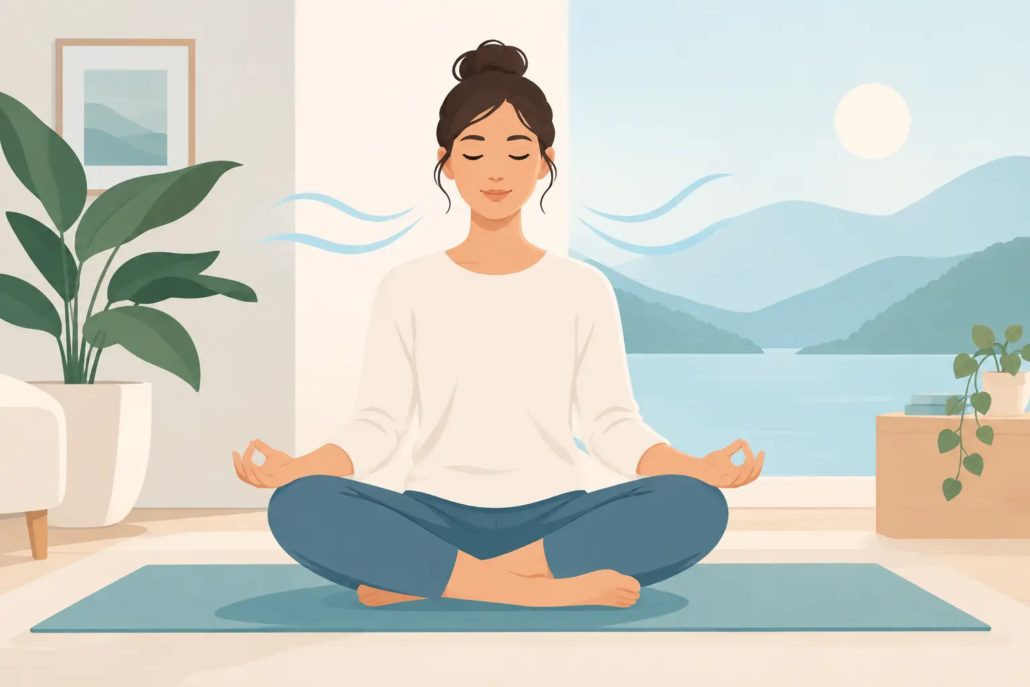
Mindful Breathing Guide for Everyday Calm
The next time your shoulders creep toward your ears, your thoughts begin racing, or the day feels louder than it should, pause before you push through. This mindful breathing guide offers a simple place to begin: notice one breath, then another. You do not need special equipment, perfect posture, or an hour of free time to give your nervous system a gentler message.
Mindful breathing is not about forcing yourself to feel calm. It is the practice of paying kind, steady attention to your breath as it moves in and out. For busy professionals, caregivers, and anyone carrying a full mental load, that small act of attention can create a welcome reset between the demands of the day.
What Mindful Breathing Can Offer
When stress rises, breathing often becomes shallow, quick, or held without us realizing it. Mindful breathing gives you a chance to soften that pattern. A slower, more intentional breath can help your body shift out of its constant hurry and make room for a clearer, steadier moment.
Many people notice that a few quiet minutes helps them feel more grounded before a meeting, after a difficult conversation, or while winding down for sleep. The benefits are personal and can vary from day to day. You may feel a release in your jaw, a lessening of tension in your chest, or simply a little more space between a stressful thought and your reaction to it.
It is also a practice of return. Your mind will wander, especially when life is busy. That is not a sign you are doing it wrong. Each time you notice and gently bring your attention back to your breath, you are practicing patience with yourself.
A Mindful Breathing Guide You Can Use Anywhere
Start by choosing a position that feels supported. You can sit in a chair with both feet on the floor, rest on a cushion, or lie down if that is more comfortable. Let your hands rest easily. There is no need to sit perfectly still or hold your body in a certain shape.
Take a moment to notice your natural breathing without changing it. Is the breath more noticeable at your nostrils, in your chest, or in your belly? Let that be your anchor. You are not trying to create a dramatic breath. You are simply becoming present for the one already happening.
Then, if it feels comfortable, breathe in gently through your nose for a count of three or four. Allow the exhale to be a little longer, perhaps four or five counts. A longer exhale often feels naturally settling, but keep it easy. Straining to hold or lengthen your breath can add tension rather than relieve it.
Continue for five to ten rounds. If counting distracts you, use a simple phrase instead. On the inhale, quietly think, “Breathing in.” On the exhale, think, “Letting go.” You might also place one hand over your heart and one on your belly, feeling the movement beneath your palms.
When you finish, do not rush away from the moment. Notice whether anything has changed, even slightly. Perhaps your breath has more room. Perhaps the outside world is still busy, but you feel more able to meet it.
Three Gentle Practices for Different Moments
A mindful breathing practice works best when it fits the moment you are actually in. The goal is not to follow a rigid rule. It is to choose something that feels supportive and realistic.
For a busy morning: five steady breaths
Before checking messages or moving into your to-do list, sit at the edge of your bed, in your parked car, or with your morning coffee. Take five unhurried breaths. Let your inhale be natural and let your exhale soften your shoulders.
This is a small ritual, but it can change the tone of the first few minutes of your day. Rather than beginning in reaction mode, you give yourself a moment of choice.
For a stressful afternoon: box breathing
When your mind feels scattered, a simple pattern can make it easier to focus. Breathe in for four counts, pause for four, breathe out for four, and pause for four. Repeat the pattern three or four times, keeping every part of the breath gentle.
If pauses do not feel good, skip them. Instead, inhale for four and exhale for four or five. The best practice is the one that leaves you feeling more comfortable, not more pressured.
For bedtime: soften the exhale
As you settle into bed, place a hand on your lower belly. Breathe in naturally, then let the breath out slowly as if you are quietly fogging a mirror. Repeat for one or two minutes.
Thoughts may continue to show up. That is normal. You do not have to solve tomorrow tonight. Each exhale is simply an invitation to release a little of what you have been holding.
How to Make the Practice Feel More Natural
Consistency matters more than duration. One peaceful minute practiced regularly can be more helpful than trying to fit in a long session once a month. Attach mindful breathing to moments already built into your day, such as waiting for the kettle to boil, sitting in the school pickup line, or washing your hands.
Your environment can also make a difference. A quiet corner, a comfortable chair, softer lighting, and a few minutes without interruptions can help your body recognize that it is safe to settle. Still, do not wait for perfect conditions. Mindful breathing can happen at your desk, in a waiting room, or in the kitchen while dinner is in the oven.
Some people enjoy pairing breathwork with other comforting wellness rituals. A warm shower, a favorite calming scent, gentle stretching, or time in a peaceful setting can help make the practice feel less like another task and more like care. At Relax, Release, Renew Salt Cave, many guests find that a quiet, restorative environment gives them space to reconnect with their breathing and simply rest.
When Breathing Exercises Feel Difficult
For some people, focusing on the breath can feel uncomfortable at first, especially during a period of high stress or anxiety. If a breathing exercise makes you feel lightheaded, tense, or more uneasy, return to your normal breath. Open your eyes, look around the room, and notice a few things you can see or feel, such as your feet against the floor.
You can also make the practice less direct. Instead of counting every breath, listen to calm music and notice your exhale from time to time. Try breathing while walking slowly, matching a few steps to your inhale and a few to your exhale. There is no prize for doing it a particular way.
If you have a respiratory condition, heart condition, panic symptoms, or any health concern that affects your breathing, check with a qualified healthcare professional before trying breath-holding or more structured breathing techniques. Mindful breathing can be a supportive self-care tool, but it is not a replacement for medical care.
Give Yourself a Place to Pause
A full day may not suddenly become quiet because you take five breaths. The dishes may still need washing, the inbox may still be full, and the next responsibility may be waiting. But mindful breathing can help you meet those realities with a little less tension and a little more presence.
Begin with one minute today. Let the breath come and go without needing to fix anything, and allow that brief pause to remind you that you deserve moments of comfort, care, and renewal.




Leave a Reply
Want to join the discussion?Feel free to contribute!