Can Salt Air Irritate Skin? What to Know
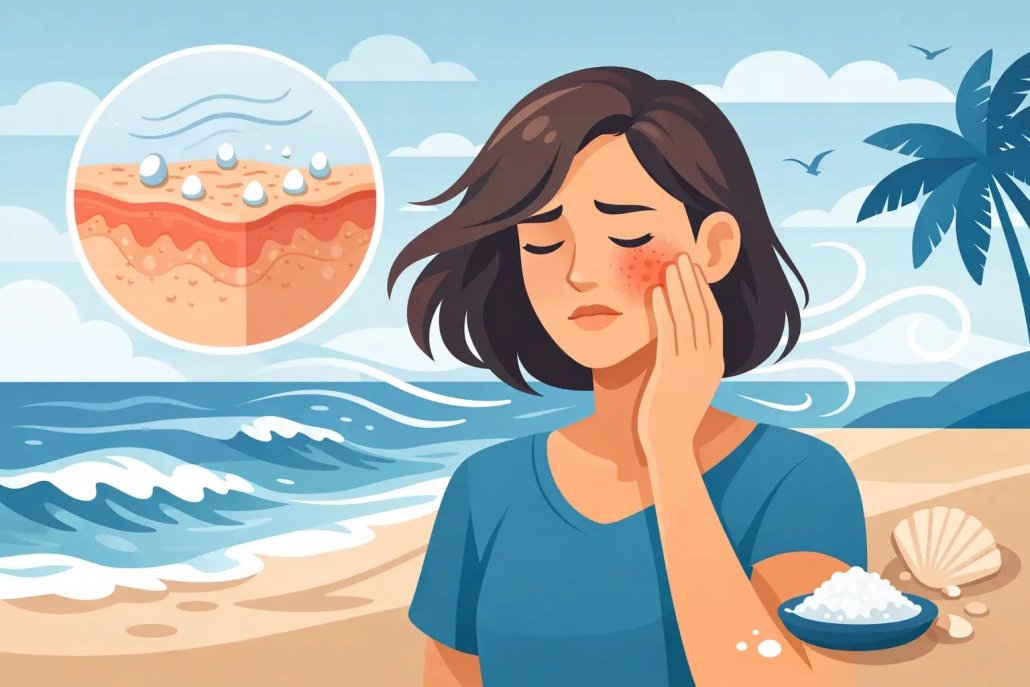
A beach day can leave your skin feeling wonderfully fresh – or unexpectedly tight, itchy, and stingy by bedtime. So, can salt air irritate skin? For some people, yes. The answer usually depends less on the air alone and more on your skin’s current condition, how much saltwater or spray touches it, and whether wind, sun, sweat, or existing dryness are part of the picture.
Salt has a long history in self-care, and many people enjoy the calming, refreshed feeling that comes with time near the ocean or in a salt-focused wellness setting. Still, a relaxing experience should feel comfortable. If your skin is sensitive, dry, or already irritated, a little preparation can make all the difference.
Can Salt Air Irritate Skin on Its Own?
Salt air is usually gentler on skin than direct contact with seawater, salty spray, or a salt scrub. In most cases, simply breathing ocean air or spending time in a dry salt environment does not cause a skin reaction. But salt particles and salty moisture can settle on the skin, and salt can feel uncomfortable when your skin barrier is compromised.
Your skin barrier is the outer layer that helps hold moisture in and keep irritants out. When it is healthy, it can usually handle a day at the beach or a relaxing wellness session without much trouble. When it is weakened by cold weather, frequent hot showers, over-exfoliation, sunburn, shaving, or a flare of eczema, even ordinary things can sting.
Salt can draw moisture, which is one reason skin may feel dry after time in ocean water. It may also sting tiny cuts, cracked knuckles, freshly shaved areas, or places where you have been scratching. That familiar ocean-water sting is not always a sign of an allergy. Often, it is simply salt reaching skin that is already tender.
There is also a big difference between salt air and a full beach environment. Wind can increase moisture loss. Sun exposure can cause inflammation and sunburn. Sand can rub against the skin, and sunscreen, sweat, and repeated rinsing can all contribute to irritation. If your skin feels rough after a coastal getaway, salt may be one piece of the story, not the only cause.
Why Salt Can Feel Different on Sensitive Skin
People with naturally dry or reactive skin may notice salt more quickly than others. Conditions such as eczema, rosacea, contact dermatitis, and psoriasis can make the skin barrier less resilient, although every person’s experience is different. Some people find mineral-rich water soothing, while others notice more dryness or burning.
The timing matters, too. Salt is more likely to bother skin when you have a fresh sunburn, an open or weeping rash, cracked skin, a recent chemical peel, or a new shave. In those moments, the goal is comfort and barrier support, not exfoliation or extra exposure.
It is also possible to react to something associated with the setting rather than salt itself. Fragrance in body products, essential oils, laundry detergent on towels, sunscreen ingredients, or even a new cleanser can trigger irritation. If you develop a repeated rash, hives, swelling, or intense itching after a particular product or experience, take that pattern seriously and speak with a qualified health professional.
Saltwater, salt scrubs, and dry salt are not the same
Direct saltwater exposure is typically the most noticeable because the water coats the skin and then evaporates, leaving salt behind. A salt scrub creates friction as well as salt exposure, so it can be too much for skin that is inflamed, freshly shaved, or very dry. Even a beautiful, nourishing scrub is best saved for healthy, intact skin.
Dry salt environments, including halotherapy spaces, feel different. Halotherapy uses fine, dry salt particles in the air rather than ocean water splashing onto the body. Some guests notice a mild dryness in their nose, throat, or skin, while many simply settle into the quiet and relaxation of the session. Wellness experiences are personal, so it is always appropriate to listen to your body instead of pushing through discomfort.
How to Enjoy Salt Therapy More Comfortably
A little gentle planning can help you enjoy the restorative side of salt therapy while being kind to your skin. Start with clean, dry skin and avoid arriving immediately after shaving, waxing, or using a strong exfoliant. If you have a cut, an active rash, or a sunburn, waiting until the area has healed is often the more comfortable choice.
Before your session, keep your routine simple. Skip heavily fragranced products if you know your skin is reactive. Choose loose, soft clothing that does not rub. If you use a dermatologist-recommended moisturizer or barrier cream regularly, follow the guidance you have already been given for your skin.
Afterward, rinse or shower with lukewarm water if your skin feels coated or dry. Hot water can make dryness worse, so there is no need to scrub. Pat your skin dry with a soft towel, then apply a gentle, fragrance-free moisturizer while your skin is still slightly damp. This helps hold onto hydration and can leave your skin feeling soft rather than tight.
Hydration matters beyond the surface as well. Sip water before and after a session, especially if you tend to feel dry in air-conditioned rooms or during Virginia’s colder months. It is a small act of self-care that supports the relaxed, cared-for feeling you came for.
When to pause and ask for guidance
Salt therapy is meant to be peaceful, not something you have to tolerate. Consider postponing a session or checking with your healthcare provider first if you have severe eczema, open skin, a skin infection, a significant sunburn, or a known sensitivity that is currently flaring. The same care applies if you have recently had a procedure that has left your skin tender.
During a session, a light feeling of dryness may be manageable with a moisturizing routine afterward. Burning, swelling, hives, worsening redness, or trouble breathing are different. Stop the exposure and seek medical advice, especially if symptoms are strong or do not settle.
At Relax, Release, Renew Salt Cave, the experience is meant to feel personal and unhurried. Let the team know if you have sensitive skin or are unsure whether a service feels right for you that day. A thoughtful conversation before your appointment can help you choose a comfortable approach to your wellness time.
Gentle Skin Care After Ocean Air or a Salt Session
The best aftercare is often the least complicated. Think comfort over correction. Use a mild cleanser only if you need one, moisturize generously, and give your skin a break from exfoliating acids, retinoids, rough towels, and heavily scented products for the rest of the day.
If you love a salt-based body scrub, enjoy it as an occasional ritual rather than a daily fix. Use light pressure, avoid broken or freshly shaved skin, and follow with a rich moisturizer. A scrub should leave your skin polished and pampered, never red or raw.
For beach days, rinse off saltwater and sand when you can, reapply sunscreen as directed, and cover up when the sun is strongest. These steps protect your skin from the factors most likely to cause a lingering reaction. The salt may get the blame, but sun and wind are often doing more of the irritating.
The Bottom Line for Sensitive Skin
Salt air can irritate skin when the barrier is already dry, damaged, or inflamed, but it is not automatically harsh or harmful. Many people enjoy salt-centered self-care without any skin discomfort at all. The key is to match the experience to what your skin needs right now.
If your skin is calm and intact, a salt cave session, ocean walk, or gentle salt scrub can be a lovely part of your reset. If it is asking for extra care, choose moisture, softness, and a slower pace. Your wellness routine should leave you feeling renewed – and your skin deserves that same kindness.




Leave a Reply
Want to join the discussion?Feel free to contribute!